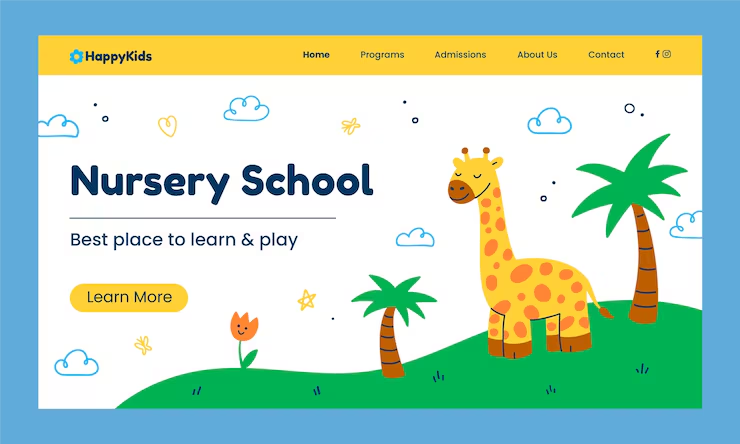
Parents make careful decisions when choosing a childcare center. They want to know how their children will be cared for, what learning activities are available, how safety is managed, and who will look after them. A well-designed website answers these concerns through clear information, genuine photographs, accessible service details, and simple enquiry options. Effective childcare websites combine professional design with useful content, transparent communication, and parent-friendly navigation. At bdog, we understand that a childcare website should do more than introduce a center. It should help families feel confident about making an enrolment enquiry by giving them the information they need to make an informed decision.
1. A Welcoming Homepage That Communicates the Center’s Values
The homepage creates a parent’s first impression of a childcare center. It should immediately communicate the center’s name, location, age groups served, and approach to early childhood education. Parents should be able to identify the services offered without searching through multiple pages.
Use a welcoming headline that explains what makes the center’s childcare approach meaningful. For example, a statement about play-based learning, individual attention, or early childhood development gives visitors a clearer understanding of the environment.
The homepage should also include:
- A short introduction to the childcare center and its philosophy.
- Professional photographs of classrooms, outdoor areas, and learning spaces.
- Links to childcare programs and age groups.
- A visible enrolment enquiry button.
- Contact details and operating hours.
Avoid filling the homepage with lengthy paragraphs or promotional claims. Parents need clear information supported by real details about the center.
2. Detailed Service Pages for Different Age Groups
Parents want to understand exactly what their children will experience at a childcare center. A single page listing all available programs rarely provides enough detail to answer their questions.
Create individual service pages for the age groups and programs offered, such as infant care, toddler care, preschool programs, and kindergarten preparation, where applicable.
Each page should explain the intended age group, daily activities, learning objectives, supervision arrangements, and developmental focus. For example, an infant care page can describe feeding routines, sleep arrangements, sensory activities, and individual care practices. A preschool page can explain early literacy, numeracy, creative activities, social development, and preparation for school.
Explain how educators adapt activities to children’s developmental stages and individual needs. Parents should also be able to find practical information about meals, rest periods, outdoor play, and communication with families.
Detailed service pages improve the usefulness of the website while helping search engines understand the specific childcare services available.
3. Safety, Staff Qualifications and Childcare Policies
Safety information is one of the most important elements parents expect from a childcare website. Families want clear evidence that the center takes children’s wellbeing seriously and follows appropriate childcare standards.
Instead of relying on broad statements such as “your child is always safe,” explain the actual procedures and policies followed by the center.
Include information about:
- Staff qualifications, relevant training, and required background checks.
- Child supervision and visitor management procedures.
- Emergency response and incident management policies.
- Hygiene, cleaning, and illness management practices.
- Food allergies, dietary requirements, and medication procedures.
- Child protection policies and family communication.
Only publish information that accurately reflects the center’s current practices. For example, mention staff-to-child ratios in accordance with applicable licensing requirements and clearly explain any relevant qualifications.
A dedicated safety and policies section helps parents assess the center’s responsibilities and understand how children’s wellbeing is supported throughout the day.
4. Real Photographs That Show the Learning Environment
Parents often want to see the environment before arranging a visit. Genuine photographs help them understand the center’s facilities, learning spaces, outdoor areas, and daily activities.
Use high-quality images of actual classrooms, play areas, reading corners, playground equipment, dining spaces, and learning resources. These photographs provide useful context that generic stock images cannot offer.
Consider creating separate image galleries for:
- Indoor learning and activity rooms.
- Outdoor play and recreation areas.
- Creative activities and learning resources.
- Dining and rest spaces.
- Center facilities and shared areas.
Obtain appropriate parental consent before publishing identifiable photographs of children. Follow privacy requirements and the center’s image-use policies.
Optimize images by using descriptive file names, relevant alternative text, and suitable file sizes. This helps visitors using assistive technology and supports image search accessibility without slowing down page loading.
5. Parent Testimonials and Genuine Reviews
Choosing childcare involves considerable trust. Parents often value feedback from other families because it provides insight into everyday experiences beyond the information presented by the center itself.
A dedicated testimonials section can feature genuine feedback about educator communication, children’s learning experiences, the environment, and family support.
Keep testimonials specific and authentic. For example, feedback describing how educators communicate daily updates or support a child’s transition into a new routine gives prospective families more useful information than a generic statement about excellent service.
You can also display verified Google reviews through an appropriate integration, provided the content is presented accurately and complies with applicable platform policies.
Do not create fictional testimonials or make unsupported claims. Genuine parent feedback helps establish credibility and gives prospective families additional context when evaluating the center.
6. Simple Navigation and Mobile-Friendly Design
Parents frequently visit childcare websites using smartphones while managing their daily schedules. A website that works well on mobile devices makes it easier to find essential information and submit enquiries.
Use a straightforward navigation structure with clearly labeled menu items, such as:
- Home
- About Us
- Childcare Programs
- Our Educators
- Facilities
- Parent Information
- Enrolment
- Contact
Keep important actions, including phone numbers and enrolment buttons, easy to access. Avoid oversized menus, unnecessary pop-ups, and complicated navigation paths.
Mobile-friendly design should also include readable typography, appropriately sized buttons, responsive images, and forms that work comfortably on smaller screens.
Pay attention to website performance. Compress images, minimize unnecessary scripts, and use reliable hosting. Google also considers page experience signals, including Core Web Vitals, when evaluating the overall experience of web pages.
A responsive website makes essential childcare information accessible to more families while reducing unnecessary obstacles during the enquiry process.
7. An Enrolment Process That Encourages More Enquiries
A childcare website should make the next step clear for parents who are interested in the center. If visitors cannot find enrolment information or struggle to submit an enquiry, the website may lose valuable opportunities.
Create a dedicated enrolment page explaining the process, eligibility requirements where applicable, required documents, and the steps involved in arranging a center visit.
An effective enquiry form should request only the information needed for an initial conversation, such as:
- Parent or guardian’s name.
- Contact email and phone number.
- Child’s age or date of birth.
- Preferred childcare program.
- Requested start date, if known.
- Additional questions or relevant requirements.
Include a clear confirmation message after submission and explain how the center will respond. Make sure enquiry forms are accessible, secure, and connected to an actively monitored email or enquiry management system.
Prominent calls to action such as “Enquire About Enrolment” and “Schedule a Center Tour” give parents clear options without making the website feel overly promotional.
8. Useful Parent Information That Answers Everyday Questions
Parents appreciate having practical information available before contacting a childcare center. A dedicated parent information section can address common concerns and reduce repetitive enquiries.
Include useful details about daily schedules, meal arrangements, rest routines, clothing requirements, communication methods, and what children should bring.
You can also publish informative articles covering subjects such as preparing a child for their first childcare experience, supporting early learning at home, and understanding developmental milestones.
For example, an article explaining how educators support children during their initial transition into childcare can help parents understand the center’s approach to settling-in procedures.
At bdog, we believe useful website content should reflect real parent concerns rather than simply repeat promotional messages. Clear, well-organized information makes a childcare website more valuable to families and gives search engines relevant content to understand.
9. Local SEO and Accessible Website Content
Parents commonly search online using location-based phrases such as childcare centers near me, daycare in [suburb], or preschool programs in [city]. A childcare website should clearly communicate its service area and location to attract relevant local searches.
Include the center’s full address, phone number, operating hours, and service locations on the contact page. Keep business details consistent with its Google Business Profile.
Use relevant local search terms naturally in page titles, headings, and service descriptions. For example, a childcare center serving families in a particular suburb can create a dedicated location page with accurate information about its facilities and programs.
Other useful SEO practices include:
- Writing unique title tags and meta descriptions for important pages.
- Using descriptive page headings and internal links.
- Adding relevant image alt text.
- Implementing appropriate LocalBusiness or childcare-related structured data where supported.
- Maintaining an XML sitemap and checking for indexing issues.
- Ensuring website content is readable and accessible.
Accessibility also deserves attention. Provide sufficient color contrast, keyboard-friendly navigation, descriptive form labels, and meaningful alternative text for informative images. These improvements help more parents use the website comfortably.
Building a Childcare Website That Parents Feel Confident Using
An effective childcare website combines trustworthy information, genuine photography, clear service descriptions, accessible design, and straightforward enrolment options. Every page should help parents understand the center’s environment, care practices, educational programs, and communication standards.
A professional website is also a valuable investment in how families perceive your childcare center. If your existing website is difficult to navigate, lacks essential information, or generates very few enquiries, reviewing its design and content can reveal opportunities for improvement.
bdog provides website design solutions focused on helping businesses build a professional online presence. Visit our website to explore our website design pricing and find an option that suits your childcare business requirements.
A well-planned website gives parents a clearer picture of the care you provide and makes taking the next step toward enrolment easier.