Modern electronic devices depend on batteries that can provide consistent energy while fitting the requirements of different applications. As people use more portable electronics in everyday life, the ability to recharge a battery instead of replacing it after every cycle has become increasingly useful. Rechargeable technologies can support repeated use while reducing the need for frequent disposal.
One widely used rechargeable chemistry is nickel-metal hydride. It has been adopted for many consumer applications because it offers a practical combination of rechargeable performance, availability, and compatibility with familiar battery formats. Understanding how this technology works and where it can be useful can help consumers make more informed choices when selecting batteries.
What Makes Rechargeable Batteries Different?
Traditional single-use batteries are designed to provide energy until their stored charge is depleted, after which they are replaced. Rechargeable batteries, by contrast, can be connected to an appropriate charger and restored for further use.
This difference can be particularly useful for products that consume batteries regularly. Instead of repeatedly purchasing replacement cells, users can recharge compatible batteries and continue using them.
Rechargeable batteries do have an initial purchase cost and require a suitable charging method. However, their ability to be reused can make them practical for long-term applications.
Understanding Nickel-Metal Hydride Technology
Nickel-metal hydride technology uses a chemical system that allows electrical energy to be stored and released through reversible reactions. The technology is commonly associated with household rechargeable battery formats such as AA and AAA.
One of its practical advantages is familiarity. Many devices that traditionally use standard disposable batteries are available in rechargeable versions, provided the device manufacturer permits their use.
The technology is also available in different capacities. Capacity is generally expressed in milliampere-hours, or mAh, and provides an indication of how much charge a battery can store.
Capacity and Everyday Performance
Battery capacity is an important specification, but a higher number does not automatically mean a battery is suitable for every application.
For example, a device that consumes energy quickly may benefit from a battery with a suitable capacity for extended operation. Another device may have different requirements based on its electronics and expected operating cycle.
Consumers should therefore consider the device manufacturer’s recommendations before choosing a rechargeable cell.
It is also useful to remember that actual operating time depends on the device, usage pattern, battery condition, temperature, and other factors. Capacity figures should be treated as an important specification rather than a guarantee of a specific runtime.
Where This Technology Can Be Used
Rechargeable nickel-metal hydride cells are available in several familiar sizes. Common examples include AA and AAA formats, while larger rechargeable formats are also available for compatible equipment.
These batteries can be useful for household electronics, portable accessories, toys, photographic equipment, flashlights, and other products designed to accept rechargeable cells.
The exact application should always be checked against the device’s instructions. Some products are designed specifically for certain battery chemistries, and rechargeable cells should not be assumed to be interchangeable with every disposable option.
The Importance of the Correct Charger
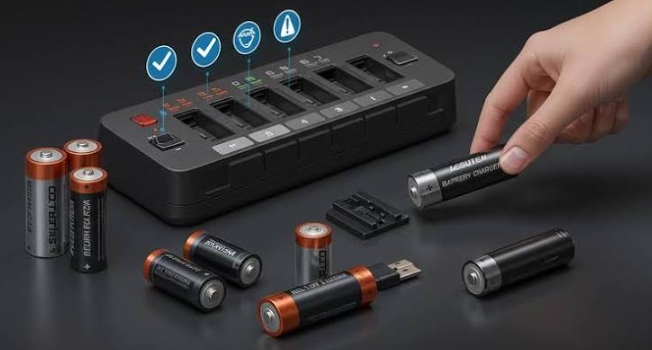
A rechargeable battery needs an appropriate charging system. Using a charger designed for the specific battery chemistry and compatible cell format helps support safe and effective charging.
Modern chargers may include features designed to manage charging cycles and prevent common charging problems. Nevertheless, users should follow the instructions provided with the batteries and charger.
It is also important not to mix incompatible battery types in the same charging system unless the charger is specifically designed to support them.
How to Extend Battery Life
Proper use and storage can help rechargeable batteries maintain useful performance over time.
Users should avoid exposing batteries to unnecessary heat or moisture. When batteries are not being used for extended periods, they should be stored according to the manufacturer’s recommendations.
It is also helpful to use batteries in compatible devices rather than repeatedly moving them between equipment with very different requirements.
When several batteries are used together, keeping them as a matched set can also make battery management easier.
Rechargeable Batteries and Waste Reduction
One of the practical benefits of rechargeable technology is repeated use. Instead of disposing of a battery after a single cycle, users can recharge it and use it again.
This can reduce the number of disposable cells purchased and discarded over the lifetime of a device. However, rechargeable batteries eventually reach the end of their useful service life and should be recycled or disposed of according to local regulations.
Consumers should never place damaged batteries into unsuitable recycling containers. Following local battery recycling guidance helps ensure that used cells are handled appropriately.
Choosing the Right Rechargeable Battery
When selecting a rechargeable battery, start by checking the device’s required size and voltage. Next, confirm whether the manufacturer permits rechargeable batteries and identify the recommended chemistry.
Capacity should then be considered based on expected usage. A frequently used device may benefit from a suitable higher-capacity option, while a less demanding product may have different requirements.
Users should also consider whether they already own a compatible charger. Buying batteries without a suitable charging solution can create unnecessary inconvenience.
GP Batteries offers a range of rechargeable products using nickel-metal hydride technology, including AA, AAA, C, and D formats. The available range demonstrates how the same general technology can be adapted to different battery sizes and applications. For users exploring different options, Nickel-metal hydride (NiMH) is an important technology to understand when comparing rechargeable power solutions.
Safe Everyday Handling
Although rechargeable batteries are designed for repeated use, they still require responsible handling.
Users should inspect batteries periodically for signs of damage. A cell that appears swollen, cracked, leaking, or otherwise damaged should not be used or charged.
Batteries should also be kept away from loose metal objects that could cause unintended contact between terminals. Storing cells in an appropriate case or packaging can help reduce accidental short circuits.
Following manufacturer instructions is the simplest way to support safe battery use.
Three Common Questions
1. Can NiMH batteries be recharged many times?
Yes. NiMH batteries are designed for repeated charging and use. The number of useful cycles varies according to the battery, charging conditions, storage, and usage patterns.
2. Are NiMH batteries available in common household sizes?
Yes. NiMH rechargeable batteries are commonly available in formats such as AA and AAA, with larger sizes also available for compatible applications.
3. Do rechargeable batteries require a special charger?
Yes. Rechargeable batteries should be charged using a charger that is compatible with their chemistry and size. Users should follow the battery and charger’s instructions rather than using an unsuitable charging device.
Conclusion
Rechargeable battery technology provides a practical alternative to constantly replacing single-use cells. Nickel-metal hydride batteries are available in familiar formats and can support a variety of compatible household and electronic applications.
Choosing the right battery requires attention to size, voltage, capacity, device compatibility, and charging requirements. With appropriate handling, charging, storage, and recycling, rechargeable batteries can become a convenient part of everyday power management while reducing the need for frequent battery replacement.