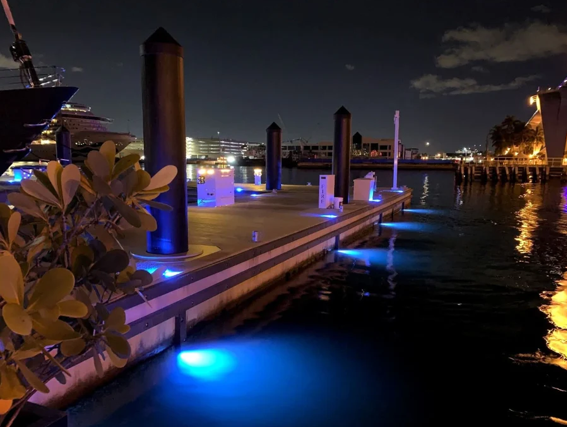
Night fishing offers different opportunities from daytime angling. Fish may move into areas where they can feed more easily, while smaller marine organisms become active around illuminated surfaces. Underwater fishing lights help anglers create a visible area beneath the water, attracting plankton and other small organisms that can draw baitfish and larger predatory species.
LED technology has made these lighting systems more accessible for recreational boat owners and fishing enthusiasts. Modern underwater fixtures offer efficient operation, different colour options, and durable construction for use in marine environments.
Their popularity comes from a combination of practical fishing benefits, lower power requirements, and flexible installation options. For anglers seeking reliable lighting solutions, led underwater fishing lights offer an effective way to improve underwater visibility and create better fishing conditions.
How Underwater Fishing Lights Work
Underwater fishing lights produce illumination beneath the water’s surface. Their light attracts certain small organisms, including plankton, depending on the local environment and water conditions.
Small baitfish may gather around these organisms, creating feeding opportunities for larger fish. Predatory species can then move into the illuminated area as they search for food.
This process is influenced by several factors, including water temperature, depth, current, species behaviour, and available food sources.
An underwater light does not guarantee a successful catch. It creates conditions that may encourage marine activity in a particular location.
Anglers often use these lights from boats, docks, and stationary fishing platforms.
See also: Carbon Fiber Boat Shade Pole: Why Material and Construction Matter in Marine Environments
Why LED Technology Is Preferred
Traditional underwater lights often relied on bulbs that consumed considerable electrical power and produced substantial heat. LEDs provide an alternative with lower energy requirements and a longer expected operating life.
This is particularly useful for fishing boats that depend on batteries for lighting and other onboard equipment. Reducing the electrical load can help preserve battery capacity during extended fishing sessions.
LED fixtures also offer compact designs that can fit into different installation locations. Their small size gives manufacturers flexibility in developing portable, transom-mounted, and permanently installed systems.
Quality varies between products, so anglers should examine electrical specifications, construction materials, and manufacturer ratings before purchasing an underwater light.
Choosing Between Blue, Green, and White Light
Underwater fishing lights are commonly available in several colours. Blue and green options are popular, while some products also offer white illumination.
Green light is frequently selected for recreational fishing because it provides visible illumination in many freshwater and saltwater environments. Its effectiveness depends on water clarity, depth, and the species being targeted.
Blue light is also used by anglers, particularly in certain marine environments. Its appearance and visibility can vary with water conditions.
White LEDs provide broad illumination and may be useful where anglers want to see the surrounding underwater area more clearly.
There is no single colour that works best in every fishing location. Local experience, target species, and water conditions should guide the selection.
Water Clarity and Light Penetration
Water clarity has a significant effect on underwater lighting performance. Suspended sediment, algae, and organic material can scatter or absorb light, reducing the distance over which a fixture remains visible.
Clear water may allow illumination to spread farther, while muddy or heavily stained water can limit its reach.
Depth also affects how the light appears. A fixture designed for shallow-water use may not provide suitable illumination at greater depths.
Anglers should review the manufacturer’s recommendations for operating depth, beam angle, and light output. Installing a light without considering these factors may produce disappointing results.
Marine-Grade Construction Matters
Underwater lighting equipment operates in a challenging environment. Fixtures remain exposed to water pressure, temperature changes, salt deposits, and potential physical impacts.
Marine-grade underwater lights generally use sealed housings, corrosion-resistant materials, and protected electrical connections.
Stainless steel, suitable marine-grade polymers, and properly treated metal housings are common construction choices. The best material depends on the design and intended application.
A waterproof rating should be checked carefully. Products intended for occasional splashing are not necessarily suitable for continuous underwater operation.
Anglers should also verify the maximum operating depth and follow the manufacturer’s installation instructions.
Portable and Permanent Installation Options
Fishing enthusiasts have different requirements depending on how they use their boats.
Portable underwater lights are useful for anglers who fish from different locations or prefer not to make permanent modifications. These units can often be deployed temporarily and removed after use.
Permanent fixtures may suit boats that regularly fish at night. Transom-mounted and hull-mounted designs can provide a fixed lighting arrangement without requiring repeated setup.
Installation should account for the boat’s structure, electrical supply, and intended operating depth. Any installation involving hull penetrations requires particular care to prevent leaks and structural problems.
A qualified marine technician should handle permanent installations where appropriate.
Using Underwater Lights to Observe Marine Activity
Underwater lights can provide anglers with a better view of activity beneath the water, especially in clear conditions.
Depending on the fixture’s position and output, anglers may be able to observe small fish gathering around the illuminated area or notice movement near the edge of the light.
This visual information can help anglers decide where to position their bait and how to approach a fishing location.
Some fishing enthusiasts also use underwater cameras alongside lighting systems. The camera provides a closer view of fish behaviour, while the light improves visibility for the recording equipment.
The amount of visible activity varies considerably between locations and should not be treated as a reliable indication of fish abundance.
Managing Battery Consumption During Long Sessions
Fishing trips can involve several hours of continuous lighting, making energy consumption an important consideration.
LED underwater lights generally require less electricity than comparable traditional lighting systems. This can help extend operating time when the boat is running on battery power.
Before purchasing a fixture, anglers should check its voltage, wattage, current draw, and compatibility with the vessel’s electrical system.
Battery capacity should be considered alongside the power demands of navigation equipment, fish finders, pumps, and other accessories.
A suitable fuse, correctly sized wiring, and protected electrical connections are also necessary. Underwater fixtures should be installed according to marine electrical safety practices.
Choosing the Right Brightness for Fishing Conditions
A brighter underwater light is not automatically the best option. Excessive illumination can create glare near the water’s surface and may not provide a useful increase in underwater visibility.
The required output depends on the depth, water clarity, size of the fishing area, and target species.
Smaller lights may be sufficient for fishing from a compact boat or dock. Larger vessels operating in deeper water may require higher-output systems with wider beam coverage.
Anglers should compare actual product specifications rather than relying only on marketing descriptions.
Adjustable brightness is a useful feature because it allows users to change illumination according to the conditions.
Environmental and Responsible Fishing Considerations
Artificial lighting can affect marine organisms and their natural behaviour. Its impact depends on brightness, colour, duration, location, and the surrounding ecosystem.
Anglers should avoid leaving underwater lights operating unnecessarily, particularly in sensitive habitats. Local fishing rules and restrictions should also be checked before using artificial lighting.
Responsible fishing practices remain necessary around illuminated areas. Catch limits, protected species regulations, seasonal restrictions, and local conservation requirements should be followed.
Lights should also be maintained properly to prevent damaged housings, loose components, or electrical faults from creating problems in the water.
A Useful Addition to Night Fishing Equipment
LED underwater fishing lights provide recreational anglers with an additional way to attract marine organisms and observe activity beneath the water. Their energy efficiency, compact construction, and range of available designs make them suitable for different fishing setups.
The most suitable product depends on water conditions, fishing depth, vessel size, electrical capacity, and target species. Marine-rated construction and correct installation deserve as much attention as brightness and colour.
For fishing enthusiasts who regularly spend time on the water after sunset, a suitable underwater lighting system can add another practical element to their fishing equipment while making nighttime fishing sessions more engaging.