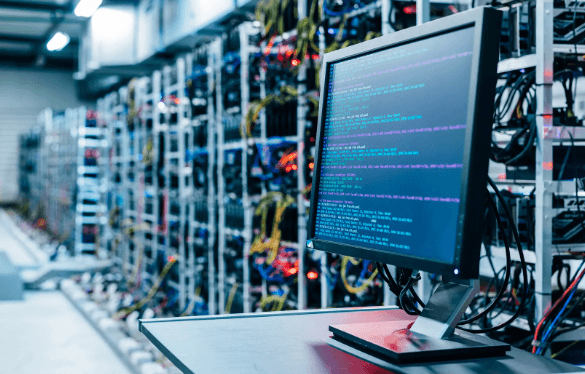
Crypto mining validates and records transactions on a blockchain by solving cryptographic puzzles. Miners compete to find a valid hash by adjusting nonces and rehashing blocks until the target is met. This Proof-of-Work process secures the network and orders transactions in a tamper-evident ledger. Costs include electricity, cooling, and hardware depreciation, while rewards come from new coins and fees. The economics and energy implications shape the future of mining and its regulatory environment.
What Exactly Is Crypto Mining and Why It Matters
Crypto mining is the process by which decentralized networks verify and record transactions on a blockchain, secured through computational work that solves complex mathematical problems. This mechanism underpins trust, decentralization, and financial sovereignty. The topic encompasses cryptocurrency basics and mining terminology, explaining incentives, block creation, and network security, while highlighting governance, energy considerations, and market implications for individuals seeking freedom within open monetary systems.
How Proof-of-Work and Hashing Work Together
Proof-of-Work (PoW) and hashing collaborate to secure a blockchain by turning computational effort into verifiable progress. In PoW, miners iteratively adjust a nonce, rehashing blocks until a target difficulty is met. This process enforces consensus and generates new blocks. The hashing mechanics ensure deterministic, tamper-evident ordering, while peers validate results to uphold network integrity and transparency. proof of work, hashing mechanics.
Who Mines and What It Takes (Costs, Equipment, and Economics)
Who participates in mining and what are the practical costs and equipment needs?
Miners range from individuals to operations, driven by potential rewards and risk.
Costs include capital, electricity, cooling, and maintenance.
Equipment economics hinges on hardware efficiency and efficiency gains over time.
Commodity electricity price shapes viability; high-efficiency rigs lower per-hash costs, while latency and uptime maximize returns.
Evolving Landscape: Energy, Regulation, and Future Trends
The evolving landscape of mining now centers on how energy markets, regulatory frameworks, and technological innovation shape viability and risk.
Energy policy influences cost and access, while grid resilience underpins dependable operation.
Regulation and compliance define permit pathways and reporting standards.
Market shifts, carbon considerations, and future trends determine where mining can sustainably scale, balancing profitability with responsible, transparent practices.
See also: The Rise of Commercial Space Technology
Frequently Asked Questions
How Do Mining Pools Affect Rewards for Solo Miners?
Mining pool dynamics dilute solo miner rewards by pooling hashpower and distributing payouts; solo miners typically receive larger, less frequent rewards. Pools smooth variance, but fees and luck influence overall earnings for a freedom-seeking, data-driven audience.
Can Non-Technical Investors Participate in Crypto Mining Profitably?
Bitcoin-like teletype devices flicker as the answer: non-technical investors can participate, but profitability potential is uncertain; careful selection and cost controls matter. Investor participation requires hardware and energy costs, risk awareness, and disciplined budgeting for returns and volatility.
What Is the Environmental Impact of Mining Beyond Energy Use?
Environmental impact beyond energy use includes environmental degradation and resource depletion driven by hardware production, e-waste, and supply chain extraction. This perspective emphasizes lifecycle effects, where mining operations influence ecosystems, metals markets, and long-term environmental resilience for freedom-focused audiences.
Are There Legal Restrictions on Mining in Residential Areas?
Exaggerated precision governs the assessment: there are regulatory limits and local zoning rules that may restrict residential mining. Cryptocurrency legality varies by jurisdiction, and zoning compliance dictates attachment to home-based operations, sometimes prohibiting equipment, noise, or power draws.
How Secure Is Crypto Mining Against Hardware Failures and Outages?
Crypto mining systems are moderately resilient; outages occur but are mitigated by redundancy planning. FWIW, hardware durability and robust cooling reduce failure risk, yet occasional downtime persists due to power or component faults. Continuous monitoring improves uptime and recovery.
Conclusion
Crypto mining secures and advances blockchain networks by solving cryptographic puzzles to validate transactions and add blocks. Miners compete by hashing nonces until the target is met, earning block rewards and fees. The process hinges on Proof-of-Work, energy use, and specialized hardware, with profitability dictated by electricity costs, hardware efficiency, and market prices. As regulation, energy policy, and technology evolve, miners adapt through efficiency gains and relocation, reshaping the economic and environmental landscape like a moving tide that tests every shoreline.