The rise of commercial space technology marks a shift from sole government-led programs to privately funded ventures. Startups pursue orbital, suborbital, and data-driven missions with rapid iteration and modular goals. Reusable rockets are reshaping cost structures and access timelines, while investors seek scalable returns amid evolving governance. Public–private collaboration grows, and shared infrastructure lowers barriers to entry. The result is a dynamic ecosystem whose concrete implications for data, services, and beyond‑LEO applications warrant closer examination.
What Is the Rise of Commercial Space Technology
The rise of commercial space technology refers to the rapid expansion of privately funded companies developing and deploying space-related capabilities.
This phenomenon tracks a shift from state-only programs to agile ventures pursuing orbital, suborbital, and data-focused aims.
Emerging markets and regulatory hurdles shape strategy, risk, and timelines, as actors balance innovation with compliance, ownership, and long-term viability within a dynamic aerospace ecosystem.
How Reusable Rockets and Lower Costs Change Access to Space
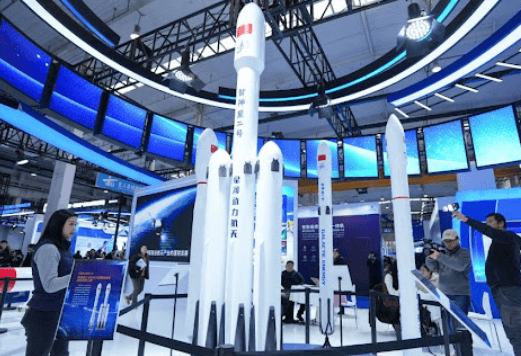
Reusable rocket technology, led by return-to-Earth flight, directly reshapes the economics and logistics of access to space.
The analysis considers how reusable rockets enable repeated launches, shortening lead times and accelerating mission cadence.
Lower costs emerge from rapid turnaround, streamlined maintenance, and shared infrastructure.
Startups, investors, and public–private collaboration fuel iterative refinement, expanding reachable data, markets, and exploration horizons with disciplined curiosity.
The Ecosystem Shift: Startups, Investors, and Public–Private Collaboration
This ecosystem shift emerges at the intersection of startup dynamism, investor foresight, and coordinated public–private programs, reshaping how space ventures move from concept to operations.
The landscape highlights space economics, where capital cycles reward rapid iteration and modular architectures, while regulatory hurdles test risk models and compliance.
Collaboration accelerates experimentation, yet remains bounded by policy, security, and accountable governance.
Real-World Impacts: Data, Satellites, and Beyond-LEO Applications
Real-world data from space platforms is increasingly shaping decision-making across sectors, with satellites delivering high-resolution imagery, sensor streams, and atmospheric measurements that were previously inaccessible at scale.
The resulting insights enable proactive risk management, precision agriculture, and disaster response, while prompting discussions on data privacy and governance; orbital debris concerns underscore the need for sustainable, responsible data collection and lifecycle planning.
See also: techarooma
Frequently Asked Questions
What Are the Risks of Space Debris From Commercial Missions?
Space debris poses collision risks, fragmentation, and operational disruption to satellites, launches, and crews; pathways depend on space corridors, requiring tracking, mitigation, and cooperative norms to sustain open, freedom-driven access while minimizing hazardous orbital congestion.
How Do Liability and Regulation Affect Commercial Space Ventures?
Symbolism: liability frameworks act as ballast, while regulatory harmonization charts a shared orbit. The analysis examines how liability frameworks and regulatory harmonization shape risk allocation, investment incentives, and compliance costs in commercial space ventures, fostering cautious, freedom-loving innovation.
What Careers Will Emerge From the Commercial Space Era?
The question suggests new career pathways will center on space skills, engineering, data analysis, and operations. Researchers, technicians, pilots, and policy specialists emerge, forming interdisciplinary roles. Curiosity drives innovation, while technical rigor supports scalable, freedom-minded space enterprise and education.
How Is Data Security Managed in Space-Based Services?
Data security on space-based services relies on data encryption and access control, implemented through robust key management, tamper-resistant modules, and multi-factor authentication; coincidence links orbital latency with cryptographic rigor, enabling autonomous, freedom-friendly resilience for interplanetary networks.
Who Profits From and Models Beyond-Leo Applications?
profit is earned by a mix of government-cleared contractors, private astronauts, and commercial operators; the models vary from launch-as-a-service to data-as-a-product, forming venture ecosystems that reward risk with scalable, mission-driven returns beyond low-Earth orbit.
Conclusion
The rise of commercial space technology marks a decisive shift in access, driven by reusable platforms, modular constellations, and agile funding cycles. As startups scale and public-private norms converge, the ecosystem absorbs risk, accelerates deployment, and expands data-driven services from Earth observation to in-space logistics. It’s a meticulous, iterative process—like fitting gears in a clock—where collaboration lowers barriers and speeds outcomes. Adage: time is the shuttle; careful execution unlocks broader horizons.